
Clive
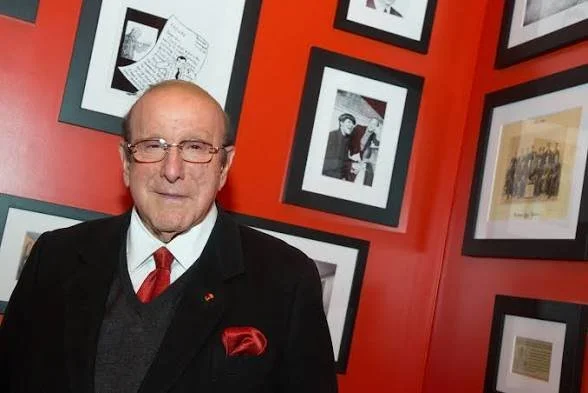
Who was I to Clive Davis? One of hundreds of songwriters who walked into his office with a cassette and a dream.
Sure he had his favorites – like Diane — who earned it. She had easier access while others had to scheme and strategize to get three minutes of analog face time. But if you played your cards right, and maybe got a little lucky, you could get a slot.
It was 1980-something for me.
I might have written the right words to Rose, his right-hand woman, in an AOL email I composed on my Atari computer – the one with that SpongeBob-head-shaped monitor.
Or maybe it was because he’d already (unbeknownst to him) recorded a song I wrote, and the persuasive producer of said song (the one who took 50% of my publishing) got me a ticket in. (Looking back, that 50% was worth the meeting. That album went on to see 3 million records.)
Whatever. I’d thought long and hard about what to play for Clive that day.
I was a wreck.
I was escorted in.
He was Royal. Kinglike behind that resolute desk. A few A&Rs-in-waiting strewn about the office.
I handed him my cassette. He pressed play.
I might have mentioned it was perfect for Whitney Houston. What an idiot I was.
He listened. Really listened. He pursed his lips.
It was all about the song for Clive. Not how edgy you looked or how you sang the demo yourself (cause hardly anyone did). You could’ve dressed like a lumberjack or looked a junkie. If he liked your song you were golden.
Sigh. He said my song was too sad. Like it was a bad thing. He was right. It was sad. It was inspired by my recent divorce.
I left Arista that afternoon thinking I shoulda played something else. A year later, Natalie Cole, at a different label, cut my sad song.
That’s not to say Clive was wrong. I mean, it wasn’t a hit. He might not have always been right, but he was right enough and when he was right, boy was he right. Janis, Whitney, Aretha, Bob, Bruce. First name basis decades later.
He didn’t hold my sad song against me, though. Years later we were face to face on several other occasions. At listening parties he threw for a handful of songwriters who he believed could write a smash for a new artist he’d signed. At his Pre-Grammy galas. At the Peninsula Hotel, where he considered a production Adam did for Curtis Stigers, after he didn’t approve of a few other VERY notable (and expensive) producers’ treatments whose names I shall not mention. He said he especially appreciated the “lilt.’” Adam and I still speak of the ‘lilt’ with affection.
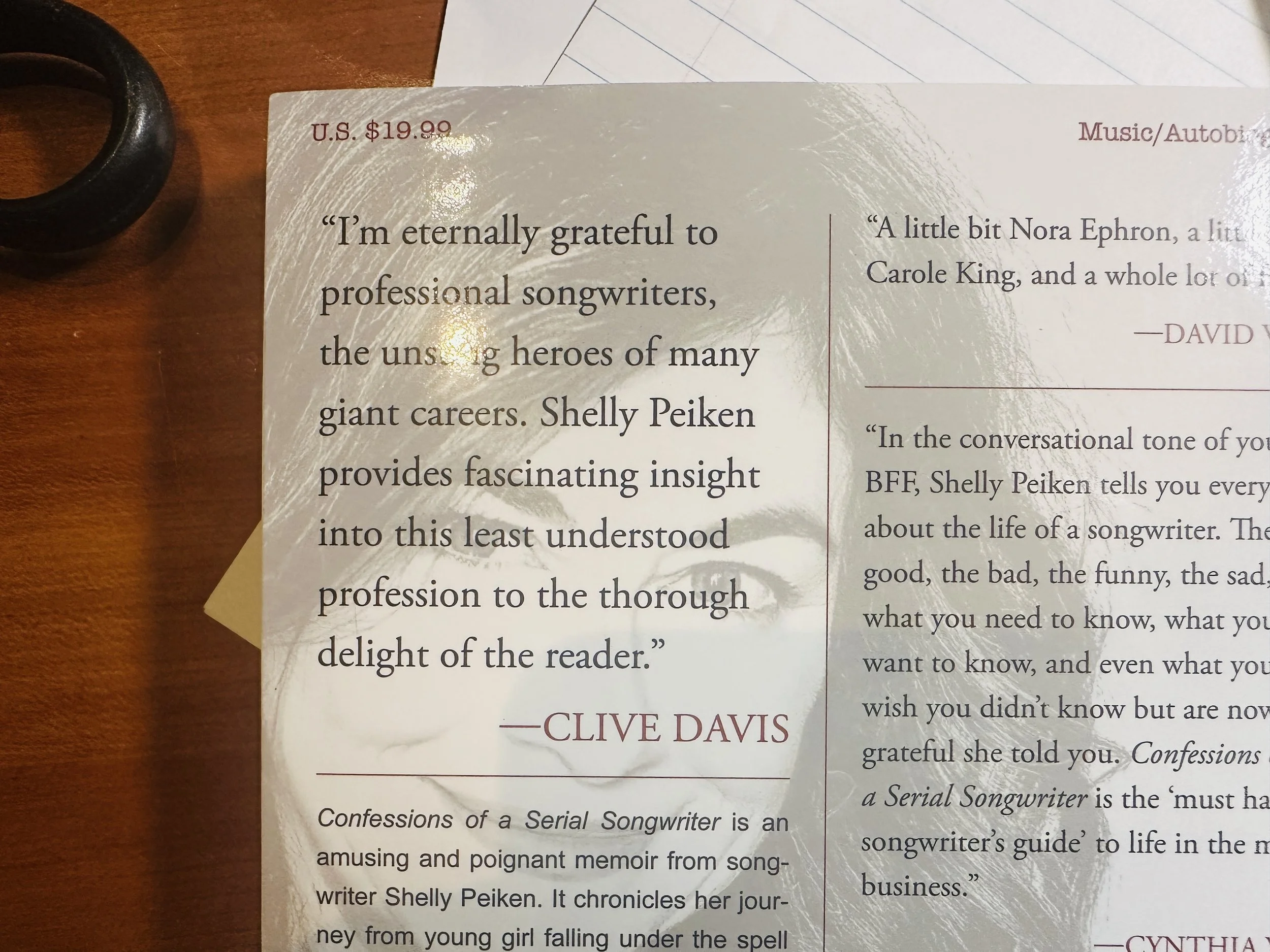
Also… Clive was gracious enough to write me a blurb for my memoir. Others might have thought he wasn’t the hippest person to grace the cover of a book but they were wrong. I couldn’t have hoped for someone more enduring.
I’m not going to write about his entire career or his mixed-bag reputation. You can read about that in Variety or Lefsetz. My memories are grateful ones only.
Clive made it possible for little nobodys like me to have a career.
94? I’d be making deals with a god I’m not sure I believe in, to live a life that long and make that kind of difference.
Clive represented an era of authentic taste makers and gatekeepers. The same ones we cussed out for rejecting most of our songs. But if they cut just one it could change your life.
Clive was one of them for me.
It’s with great respect and admiration I say … good-bye. And thank you.
Thanks for being here. Subscribe to my blog here. Get a signed CD or copy of Confession of a Serial Songwriter. And visit me on my Serial Songwriter Facebook Page.